Every year, more than 25 percent of smartphone users experience some form of water damage to their devices. One quick splash or accidental drop can lead to costly repairs or even render a phone useless. Understanding how water affects phones, what types of spills are most dangerous, and which steps offer real recovery options can help you protect your investment and avoid a sudden tech crisis.
Table of Contents
- What Water Damage Means For Phones
- Main Types Of Phone Water Exposure
- Essential Repair Steps And Tools
- Risks, Costs, And Warranty Issues
- Choosing Professional Repair Vs Diy
Key Takeaways
| Point | Details |
|---|---|
| Water damage is critical | Even minor exposure can lead to rapid internal destruction of smartphones, making immediate action crucial. |
| Different liquids pose varying risks | Types of liquids can greatly affect the level and speed of damage, with saltwater being particularly destructive. |
| Effective repair actions are vital | Power off the device and dry it carefully using silica gel, avoiding rice, to prevent further damage. |
| Professional repair is often best | While DIY options may be tempting, professional repair services offer enhanced safety and a higher chance of successful restoration. |
What Water Damage Means For Phones
Water damage represents a serious threat to modern smartphones, capable of causing catastrophic internal destruction within minutes of exposure. According to SamMobile, water intrusion can create electrical shorts and trigger comprehensive circuit board corrosion, potentially rendering your device permanently unusable.
The consequences of water exposure extend far beyond surface moisture. Electrical components are incredibly vulnerable, with even small amounts of liquid capable of creating devastating short circuits. PhoneRepairAZ highlights that moisture can penetrate device seals, weaken electrical contacts, and leave mineral deposits that compromise internal metal parts.
Different types of water pose varying levels of risk. Saltwater is particularly destructive, accelerating corrosion much faster than freshwater. The damage potential depends on several critical factors:
- Duration of liquid exposure
- Type of liquid (freshwater vs. saltwater)
- Temperature of the liquid
- Specific device model and water resistance rating
The most alarming aspect of water damage is its rapid progression. What might seem like a minor spill can trigger comprehensive internal destruction within minutes, making immediate action crucial for potential device survival.
Main Types of Phone Water Exposure
Water exposure for phones isn’t a one-size-fits-all scenario. According to FoneTechnician, phones can encounter multiple liquid threats ranging from freshwater to complex beverage spills, each presenting unique risks to internal components.
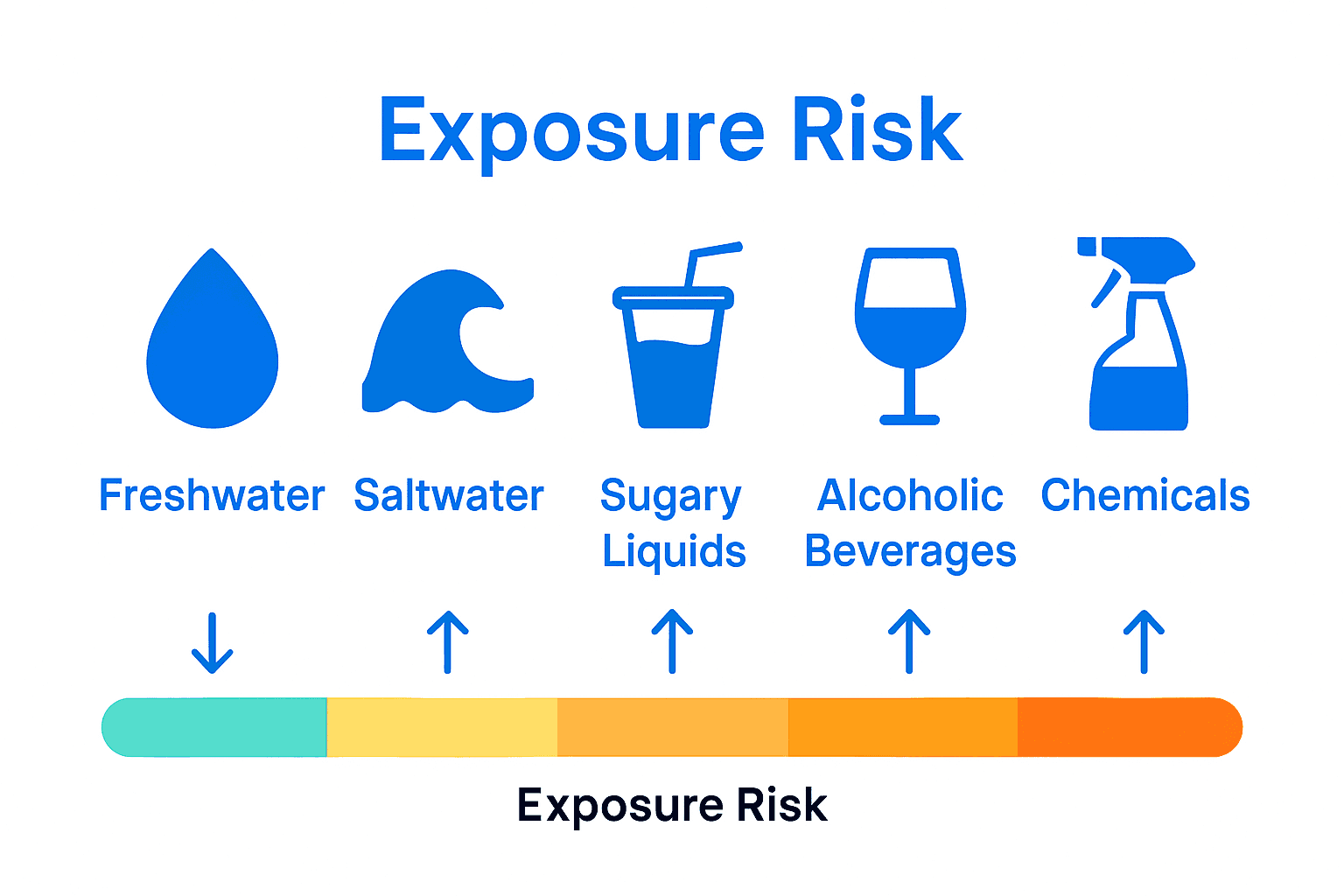
Liquid types vary significantly in their potential for device destruction. SamMobile emphasizes that saltwater is particularly dangerous, with its higher conductivity causing faster and more extensive damage compared to freshwater. The key liquid exposure categories include:
- Freshwater: Tap water, rain, accidental drink spills
- Saltwater: Ocean water, swimming pool chlorinated water
- Sugary Liquids: Sodas, juices, energy drinks
- Alcoholic Beverages: Cocktails, beer, wine
- Chemical Liquids: Cleaning solutions, perfumes
Each liquid type introduces unique challenges. Sugary drinks can leave sticky residues that corrode circuits, while chemical liquids might cause immediate and irreversible damage. High humidity and steam can also infiltrate devices, creating microscopic moisture damage that gradually compromises internal electronics.
Here’s a comparison of water exposure types and their risks:
| Liquid Type | Common Sources | Main Risks |
|---|---|---|
| Freshwater | Tap water Rain Drink spills |
Corrosion Short circuits |
| Saltwater | Ocean water Pool water |
Rapid corrosion Mineral deposits |
| Sugary Liquids | Sodas Juices Energy drinks |
Sticky residues Circuit damage |
| Alcoholic Beverages | Cocktails Beer Wine |
Residue Chemical reaction |
| Chemical Liquids | Cleaners Perfumes |
Immediate internal damage |
Understanding these liquid exposure types is crucial for preventing long-term device damage and knowing exactly how to respond when an accidental spill occurs.
For a comprehensive look at protecting your device, check out our guide on phone repairs.
Essential Repair Steps and Tools
When disaster strikes and your phone takes an unexpected swim, knowing the right immediate steps can mean the difference between recovery and total device loss. According to Science Alert, the first critical action is to power off the device immediately and remove the SIM card to prevent electrical short-circuiting.
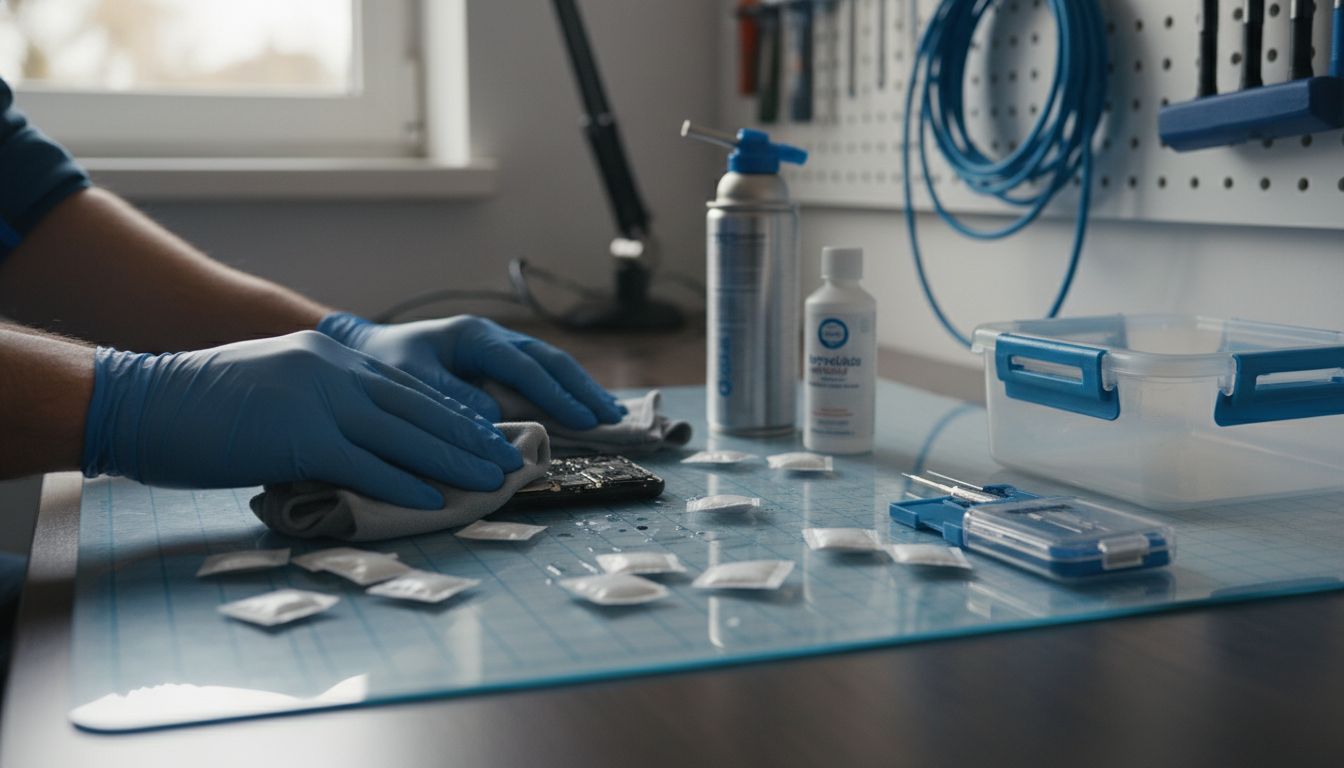
Emergency water damage repair requires a precise approach. NH Register emphasizes the importance of thorough drying without using heat sources that could further damage internal components. The essential tools and materials for water damage recovery include:
- Soft, lint-free microfiber cloth
- Silica gel packets
- Airtight container
- Precision screwdriver set
- Isopropyl alcohol (90% or higher)
- Compressed air
- Anti-static work surface
The drying process is delicate and time-sensitive. Avoid common myths like using rice, which can introduce additional debris into your device. Instead, gently shake out excess water, pat dry with a microfiber cloth, and place the phone in an airtight container with multiple silica gel packets to absorb moisture effectively.
For a comprehensive understanding of device restoration techniques, check out our practical device repair examples that can help you navigate complex repair scenarios.
Risks, Costs, and Warranty Issues
Water damage represents a significant financial and technical risk for smartphone owners. Android Authority warns that water resistance in phones degrades over time, creating a false sense of security that can lead to costly repairs.
Warranty limitations are surprisingly strict when it comes to liquid damage. According to Universal College of Engineering, major manufacturers like Apple and Sony explicitly exclude liquid damage from standard warranty coverage. The potential financial implications can be substantial:
- Basic water damage repair: $50 – $150
- Moderate component replacement: $150 – $300
- Complete device replacement: $300 – $800
- Advanced microsoldering repairs: $200 – $500
The most critical risk is not just immediate damage, but the long-term degradation of internal components. Water exposure can create microscopic corrosion that slowly destroys circuit boards, potentially rendering your device unusable months after the initial incident. Manufacturers design warranties to protect against manufacturing defects, not user-induced liquid damage.
To protect yourself financially, consider purchasing extended warranties or device insurance that specifically covers liquid damage. For more insights into protecting your device, check out our practical device repair examples that can help you understand potential repair scenarios.
Choosing Professional Repair vs DIY
When your phone encounters water damage, the decision between DIY repair and professional intervention can be critical. Wikipedia emphasizes that while restoration can be attempted independently, certified professionals often provide the safest and most reliable solution.
Repair approaches come with distinct advantages and risks. Science Alert warns that improper handling during DIY attempts can potentially cause more damage than the original water exposure. Here’s a comparative breakdown:
DIY Repair Pros:
- Lower initial cost
- Immediate action possible
- Learning experience
DIY Repair Cons:
- High risk of further damage
- Lack of specialized tools
- No professional warranty
Professional Repair Pros:
- Expert diagnostic capabilities
- Specialized equipment
- Comprehensive warranty coverage
- Higher success rate
The most significant factor is the extent of water damage. Minor exposure might be manageable with careful DIY steps, but complex water damage requires professional intervention. Technicians have specialized tools and diagnostic equipment to identify and address microscopic corrosion and electrical issues that aren’t visible to the untrained eye.
If you’re uncertain about your repair capabilities, it’s wise to consult professional repair options before attempting complex water damage restoration.
Restore Your Water Damaged Phone With Trusted Experts
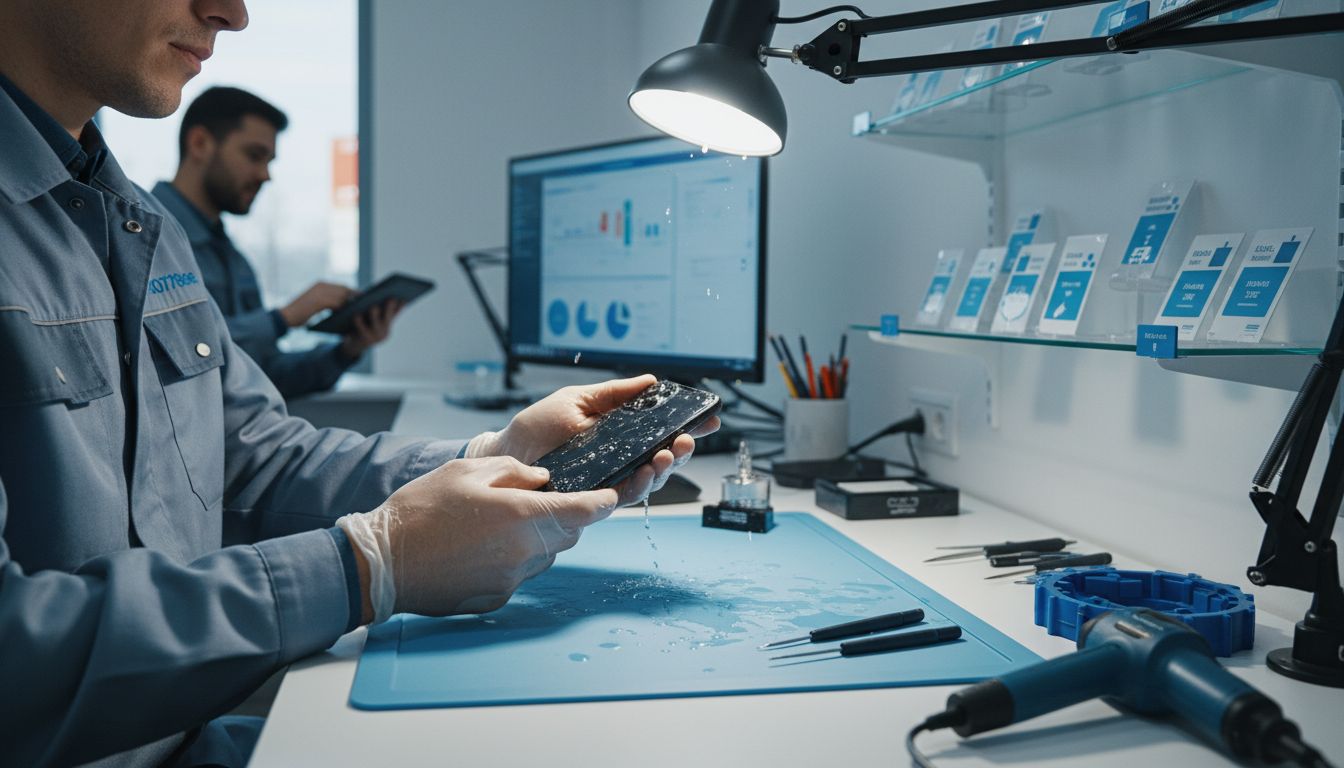
Water damage can strike quickly and leave your smartphone at serious risk of permanent failure. If you have noticed corrosion, sticky residues, or erratic functioning after liquid exposure it is crucial to act fast and avoid further harm. At Dash Repairs, we understand how stressful water damage can be. Whether your device suffered a splash of freshwater, salty ocean water, or spilled sugary drink, our expert technicians use proven techniques and specialized tools to revive your phone efficiently.
Don’t let water damage ruin your connection to the world. Visit our Cell Phone Repair page to explore professional water damage repair options tailored for iPhones and Android devices. For dedicated Apple users, check out our iPhone Repair services. Act now while damage can still be mitigated. Contact us today at Dash Repairs for fast, reliable, and affordable solutions to bring your device back to life.
Frequently Asked Questions
What should I do immediately after my phone gets wet?
To minimize water damage, immediately power off the device, remove the SIM card, and shake out any excess water. Avoid using heat sources for drying.
How does different types of liquid affect my phone’s internals?
Freshwater causes corrosion and short circuits, saltwater accelerates corrosion significantly, while sugary and chemical liquids can leave harmful residues or cause immediate damage.
Can I fix water-damaged phones at home, or should I seek professional help?
While some minor repairs can be done at home, professional repair services have specialized tools and expertise, making them a safer choice for significant water damage.
What are the potential costs involved in repairing water-damaged phones?
Repair costs vary depending on damage severity—basic repairs can range from $50 to $150, while component replacements may cost $150 to $300, and complete replacements could exceed $800.
Recommended
- 7 Most Common Phone Repairs You Need to Know | Dash Cellular Repair | Cell Phone, iPhone, Laptop Repair in Oklahoma
- 7 Types of Phone Repairs You Need to Know About | Dash Cellular Repair | Cell Phone, iPhone, Laptop Repair in Oklahoma
- Phone Stopped Working? Here’s What You Should Do! | Dash Cellular Repair | Cell Phone, iPhone, Laptop Repair in Oklahoma
- Choosing the Right Cell Phone Repair Shop | Dash Cellular Repair | Cell Phone, iPhone, Laptop Repair in Oklahoma